OSU Expansion Effect on Columbus Real Estate
Ohio State University's $3 billion-plus capital expansion is driving sustained demand for housing near campus and across Central Ohio, creating real opportunities for buyers, lifestyle seekers, and investors as new hospital, research, and academic facilities come online through 2026 and beyond.
How is Ohio State University's expansion affecting Columbus real estate?
Ohio State University is investing more than $3 billion in capital projects on its main campus and throughout Central Ohio, including a 26-story hospital tower, new engineering and arts facilities, and the Carmenton innovation district. That level of sustained institutional investment draws thousands of faculty, medical professionals, researchers, and graduate students who need housing, creating durable demand in neighborhoods surrounding campus and rippling outward across the metro.
Here's what I tell buyers and investors who ask me about this: OSU's expansion isn't a short-term enrollment spike. It's a structural shift in where Columbus is growing, and understanding it can help you position a purchase well before the broader market catches up.
What OSU Is Actually Building (and Why It Matters for Housing)
The scale of what's underway is worth understanding before we talk real estate. According to Columbus Business First, Ohio State's major capital program exceeds $3 billion and spans multiple projects across the main campus and Central Ohio. Several of those projects opened or are opening between 2025 and 2026.
Key projects include:
A $1.9 billion, 26-story hospital tower that opened in early 2026, per the Ohio State Alumni Magazine's illustrated campus guide
A 248,000-square-foot, two-phase College of Engineering complex, with phase two opening January 2026
New theatre and music buildings expanding the arts footprint on campus
The Carmenton innovation district, anchored by the Pelotonia Research Center and the Energy Advancement and Innovation Center, highlighted in OSU's Framework planning materials
What makes this significant for real estate isn't the buildings themselves. It's the employment they generate. Physicians, nurses, researchers, engineers, and faculty don't live in dorms. They rent apartments, buy condos, and purchase single-family homes. That demand is already arriving, and it's the kind that sticks.
OSU's financial position reinforces the staying power of this expansion. The university's interim financial report for the 12 months ended June 30, 2024 showed revenue growth across healthcare, grants and contracts, and tuition, suggesting this capital investment cycle reflects a long-term strategic trajectory, not a one-time budget flush.
The neighborhoods absorbing this demand
The research notes don't give me per-block price data, and I'm not going to invent it. What I can tell you, from working in this market and watching where OSU-adjacent buyers land, is that the demand is clustering in a few recognizable areas.
University District and Old North Columbus remain the traditional core. The expansion of medical and research facilities is increasing pressure on both rents and the value of older housing stock that investors are rehabbing or converting.
Clintonville and the North Campus corridor attract faculty, graduate students, and medical professionals who want single-family homes or duplexes within a practical commute of campus. This is a neighborhood where a well-priced duplex can serve both lifestyle and investment purposes.
Grandview Heights and the Fifth Avenue corridor have long been popular with young professionals tied to OSU and downtown. The hospital tower and Carmenton district expansion add another layer of demand here, particularly for townhomes, condos, and mixed-use living options.
If you're relocating to Columbus for a position tied to OSU and you're not sure where to plant roots, I'd encourage you to read where newcomers to Central Ohio actually end up living for a broader view of how the metro's different areas compare.
What the 2026 Market Looks Like for OSU-Adjacent Buyers and Investors
Here's where the opportunity framing gets interesting. Central Ohio prices are still rising, but the market has softened just enough to give buyers more room to work with than they had in 2022 or 2023.
The Axios Columbus June 2026 report noted that Franklin County had 2,222 homes for sale in April 2026, up from 1,920 in April 2025. The average sale price reached $391,617, a 5.9% increase year over year. Homes averaged 31 days on market, up from 27 a year earlier.
For context, Columbus REALTORS' data shows the Columbus and Central Ohio Regional MLS recorded 2,516 closed sales in April 2026, a 1.3% dip from April 2025. The full-year 2025 baseline: a median sold price of $327,500 (up 2.4% from 2024) and 29,626 closed sales (up 3.0%), according to Columbus REALTORS' 2025 Year in Review.
What this combination of rising prices and rising inventory means in practice is that buyers are no longer waived-inspection, over-ask, or nothing. There's room to negotiate contingencies, request repairs, and take a breath before deciding. For investors targeting OSU-adjacent properties specifically, that shift matters. Value-add plays on duplexes and small multifamily properties are more realistic when you're not competing against ten cash offers.
Recent local market data across Central Ohio's key areas gives a useful at-a-glance picture of where prices and pace stand as of August 2026:
AreaMedian Sale PriceMedian Days on MarketLewis Center$549,05549Powell$540,00041Dublin$580,00034Westerville$454,00032Delaware$415,00041Upper Arlington$677,50053New Albany$627,45052Orange Township$581,50061
These are area-level medians from aggregated public listing data trailing roughly 90 days. An individual home's value depends on condition, street, build year, and timing. Upper Arlington's median of $677,500 reflects its proximity to OSU's main campus and its established single-family character. That's the kind of specific context that changes what "opportunity" means depending on your budget and goals.
The investor angle: aligning with OSU's opening schedule
One of the more practical strategies I've seen work for investors in this market is timing renovations to coincide with major OSU project openings. If a new cohort of medical residents or research staff is arriving in mid-2026, you want your renovated unit available, not under construction. The cluster of OSU openings between spring 2025 and early 2026 has already created that demand wave. The Carmenton district's research facilities represent the next phase.
The Carmenton innovation district, anchored by the Pelotonia Research Center and the Energy Advancement and Innovation Center, tends to draw higher-income, longer-tenure employees in research and technology fields. That's a different tenant profile than undergrad student housing, and it supports a different investment thesis: quality over quantity, longer leases, and properties that hold value through market cycles.
For anyone considering a purchase in this space, the standard Ohio transaction process still applies. Closings in Columbus go through a title company, which handles the title search, escrow, and deed recording with the Franklin County Recorder. The Ohio Department of Taxation and the Franklin County Auditor govern the real property conveyance fee due at recording. Who pays that fee is typically negotiated between buyer and seller in the purchase contract. Ohio also requires sellers of 1-to-4-unit residential property to complete a Residential Property Disclosure form, published by the Ohio Division of Real Estate and Professional Licensing. None of that changes because a property is OSU-adjacent, but it's worth knowing before you're in contract.
If you want a broader read on where the Columbus market stands heading into fall 2026, the June 2026 Columbus housing market update covers the metro-level trends in more detail.
How to Think About Your Own Next Move
Whether you're buying near OSU for lifestyle reasons, relocating for a position at the university or medical center, or evaluating an investment property, the opportunity here is real but it's also specific to your situation. The right neighborhood, price band, and property type depend on factors that don't resolve on a blog.
What I can tell you is that institutional growth of this scale, sustained by a financially strong university with a multi-year capital pipeline, doesn't evaporate. Columbus was already one of the National Association of REALTORS' consistently tracked growth metros. OSU's expansion is one of the structural reasons why.
Your specific opportunity depends on your timeline, your goals, and what the numbers look like for your particular situation. That's exactly the kind of conversation I have with clients before we ever start scheduling showings.
Frequently Asked Questions
How is Ohio State's campus expansion changing home values in neighborhoods around OSU?
OSU's expansion adds sustained employment demand from faculty, medical staff, and researchers, which puts upward pressure on both rents and purchase prices in neighborhoods within practical commuting distance of campus. Franklin County's median sale price hit a record $320,000 in March 2026, up 3.2% year over year, per local market reports. The effect is most visible in areas like Clintonville, Grandview Heights, and Upper Arlington, where housing stock and proximity intersect with the types of buyers OSU's growth attracts.
Is it a smart move to buy a rental or house-hack property near OSU's main campus right now?
The 2026 market offers more negotiating room than the past few years, with inventory in Franklin County up roughly 16% year over year as of April 2026. That creates better conditions for value-add investment plays than the frenzied competition of 2021-2022. Whether it makes sense for you depends on your financing, your target tenant profile, and the specific property, so running the numbers with a local agent and your lender before committing is the right move.
Which Columbus neighborhoods benefit most from OSU's new hospital tower and Carmenton innovation district?
The $1.9 billion hospital tower, which opened in early 2026, and the Carmenton district's research facilities concentrate new employment near OSU's main campus. Neighborhoods like University District, Clintonville, Grandview Heights, and Upper Arlington tend to absorb the housing demand from medical and research professionals who want walkable access to campus. Upper Arlington's median sale price reached $677,500 in recent local market data, reflecting its established position as a destination for higher-income OSU-adjacent buyers.
Are home prices in Franklin County still going up in 2026, or has the market cooled?
Prices are still rising, but the pace has moderated and inventory has grown. The average sale price in Franklin County reached $391,617 in April 2026, up 5.9% year over year, according to Axios Columbus. At the same time, homes are taking slightly longer to sell and there are more listings to choose from than a year ago. It's a firming market, not a cooling one, but buyers have meaningfully more leverage than they did in peak competition years.
How do longer days on market and higher inventory affect buyers looking near OSU's campus?
More inventory and slightly longer marketing times shift the dynamic in buyers' favor. In April 2026, Franklin County had roughly 300 more homes for sale than the same month in 2025, per Axios Columbus data. That means buyers near OSU can negotiate inspection contingencies, request repairs, and take time to evaluate a property without automatically losing to a competing offer. It doesn't mean prices are dropping, but it does mean the process is less frantic than it was a few years ago.
The right approach is still to move decisively when you find the right property. More inventory doesn't mean unlimited time, especially in high-demand corridors close to campus.
OSU's expansion is one of the clearest structural tailwinds in the Columbus real estate market right now, and understanding it can help you buy with more confidence and better timing. I work with buyers, investors, and relocating professionals across Central Ohio every day, and I'd be glad to walk through what this means for your specific situation.
Ready to talk through your options? Schedule a consultation and let's look at what the OSU expansion means for your next move.
About Chrisi Hagan
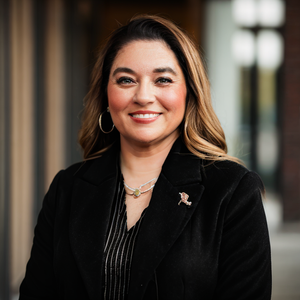
Chrisi Hagan is a REALTOR® with the Collins Lassiter Group at Red 1 Realty, serving Columbus and Central Ohio. Ranked in the top 1% of Columbus MLS agents, she specializes in helping buyers and sellers, including those rightsizing, relocating, and military families, make confident moves across the region.
Equal Housing Opportunity. Chrisi Hagan is licensed as a Real Estate Salesperson in Ohio, regulated by the Ohio Division of Real Estate & Professional Licensing. This article is general information only and does not constitute legal, tax, or financial advice. Confirm your specific numbers with your title company, tax advisor, or lender.