Ohio State's Growth and Columbus Real Estate
Ohio State University's record enrollment, 67,255 students as of Autumn 2025, creates sustained housing demand near campus and ripple effects across Central Ohio suburbs. Buyers face layered competition from investors and owner-occupants, while sellers near campus can market to a wider pool. A local agent helps you position correctly for both.
How does Ohio State University's growth affect Columbus and Central Ohio real estate?
Ohio State's steady enrollment growth puts consistent pressure on housing near its Columbus campus and sends ripple effects into suburban markets across Central Ohio. As of Autumn 2025, the most recent official data available, total university enrollment reached 67,255 students, with Columbus undergraduate enrollment hitting a record 46,627. That concentration of students, faculty, and staff keeps demand for both rentals and owner-occupied homes elevated in ways that shape pricing, competition, and strategy for buyers and sellers across the region.
Key Takeaways
Ohio State's Autumn 2025 enrollment of 67,255 students is the most recent official figure available as of September 2026, with Columbus undergraduate enrollment at a record 46,627.
Near-campus neighborhoods see layered buyer competition: investors targeting student rentals, parents buying for OSU students, and owner-occupants all compete for the same properties.
Across Central Ohio, recent market data shows median sale prices ranging from $440,000 in Delaware to $667,500 in Upper Arlington, reflecting how OSU-driven demand fans out into suburbs where university employees and graduate students buy.
Franklin County's real property conveyance tax is set by statute at $3 per $1,000 of sale price (a $1 state fee plus a $2 county fee), plus a $0.50 per-parcel transfer fee, these rates are fixed by law, though who pays them is negotiable in the purchase contract.
Properties near campus with rental potential attract multiple buyer types simultaneously, which means sellers can often market to a broader pool than a typical suburban listing.
What does Ohio State's enrollment growth actually mean for housing near campus?
The short answer: more students means more competition for housing near campus, and that pressure doesn't stay contained to the University District.
According to Ohio State's Office of Institutional Research and Planning, the 2024–25 academic year saw 61,443 students on the Columbus campus alone out of a total university enrollment of 66,901. Then, Autumn 2025 data from Ohio State News pushed that number further, total enrollment rose to 67,255, a 0.5% increase, with Columbus undergraduate enrollment reaching a record 46,627 in the university's 154-year history. These are the most recent official figures available as of September 8, 2026.
That's not explosive growth, but it's consistent and cumulative. CollegeTuitionCompare's enrollment trend analysis shows Ohio State's student population grew by roughly 2,780 over the past decade. Gradual, steady growth is actually harder for a housing market to absorb than a single spike, it keeps demand elevated year after year without triggering a supply response proportional to the need.
Which neighborhoods feel it most directly?
The immediate pressure lands in the University District and its adjacent neighborhoods: North Campus, South Campus, Old North Columbus, and Weinland Park. These areas have the highest concentrations of student rentals, and with record undergrad enrollment, competition for well-located duplexes, triplexes, and small apartment buildings has intensified. I work with buyers who are surprised by how fast these properties move and how many competing offers come in, especially when a property can serve as a house-hack (owner-occupied with student roommates) or a straightforward rental.
Clintonville and Grandview Heights sit a step removed but are consistently popular with faculty, graduate students, and young professionals who want walkable access to campus without being in the middle of the student rental zone. These neighborhoods draw owner-occupants who have a direct connection to OSU's employment base.
How does OSU's growth reach the suburbs?
Ohio State is one of Central Ohio's largest employers. That employment base, researchers, medical staff, administrators, faculty, drives housing demand well beyond campus. Professionals working at OSU or the OSU Medical Center often buy in Dublin, Westerville, Hilliard, or Delaware, where they can get more space. That connection ties university growth directly to suburban market conditions.
Recent local market data (trailing approximately 90 days as of September 2026) shows where those buyers are landing across Central Ohio:
AreaMedian Sale PriceMedian Days on MarketLewis Center$550,00050Powell$540,00042Dublin$590,00036Westerville$454,00034Delaware$440,00042Upper Arlington$667,50053New Albany$600,00050Orange Township$600,70064
Upper Arlington's $667,500 median reflects its proximity to campus and its appeal to buyers who want to be close to OSU without living in a student-heavy neighborhood. Dublin and New Albany attract buyers who prioritize space and commutability. These are area-level medians, an individual home's value depends on condition, street, build year, and timing, but the table gives you a real sense of where the market sits right now.
I always help buyers choose the right community first, because finding the right neighborhood for your life, not just the right house, is what makes a move work long-term. Whether you're a first-time buyer, a relocating professional, or someone investing near campus, that community fit matters as much as the price.
What buyers and sellers near OSU need to know before they act
If you're buying near campus
Expect layered competition. A single-family home within walking or biking distance of OSU can attract investors targeting student housing, parents buying a place for their college student, and owner-occupants who want the walkability and amenities of the campus corridor. That's three distinct buyer pools competing for the same property.
According to Ohio State's Autumn 2025 Enrollment Report, record undergraduate enrollment means consistent off-campus housing demand, vacancy risk in well-located near-campus rentals is low for investors who manage their properties well. But if you're buying as an owner-occupant rather than an investor, be prepared to differentiate your offer from the investor pool.
One important financing note: lenders may treat properties with multiple unrelated tenants as investment or non-owner-occupied, which affects underwriting requirements. Clarify your intended use with your lender early, and work with a loan officer familiar with Columbus and near-campus properties. This is the kind of detail that can derail a deal if it surfaces at the last minute.
For a broader look at how buyers are moving through the Central Ohio market right now, the June 2026 Columbus Housing Market Update has context worth reading before you start your search.
If you're selling near campus
Your buyer pool is wider than you might think. A property near OSU can be marketed to investors, to parents of current or incoming students, and to owner-occupants who value campus proximity. How you position the listing, as a rental, as a potential house-hack, or as a primary residence, affects which buyers you attract and at what price.
Older housing stock near campus sometimes comes with a more complex title or zoning history, particularly if a single-family home was converted to a multi-unit rental at some point. Your title company will work through that before closing, but it's worth knowing upfront so there are no surprises.
Sellers should also understand the Franklin County real property conveyance fee. As of the Franklin County Auditor's published standards (last updated January 2026), the conveyance tax is $3 per $1,000 of the property's sale price. That rate combines a mandatory $1 per $1,000 state fee under Ohio Revised Code §319.54(G)(3) and a $2 per $1,000 permissive county fee under Ohio Revised Code §322.02(A). There's also a $0.50 transfer fee per parcel per document.
These rates are fixed by law and county resolution, they're not negotiable the way private closing costs are. What is negotiable is who pays them: buyer or seller. That allocation is set in your purchase contract, not by convention, so don't assume. Your title company will calculate the exact amount based on the final sale price and coordinate payment with the Franklin County Auditor's Transfer and Conveyance Department. The Auditor also maintains a Conveyance Tax Calculator on its website that title companies and practitioners use to compute the statutory fees accurately.
Beyond conveyance fees, other closing costs, title insurance, escrow, and the like, are private-market charges that vary. The only accurate way to know your specific numbers is to run them with someone who knows this market and your property. That's exactly the conversation I have with every seller before we go to market.
If you're also weighing whether a cash offer might be part of your exit strategy, read this first: what Central Ohio homeowners need to know about "We Buy Houses" offers.
Frequently Asked Questions
How is Ohio State's enrollment growth affecting home prices and rents around campus in Columbus?
Record undergraduate enrollment on the Columbus campus, 46,627 students as of Autumn 2025, according to Ohio State's Strategic Enrollment Management office, keeps demand for off-campus housing consistently elevated, which supports both rental rates and purchase prices in near-campus neighborhoods. While official rent data for the University District isn't published in a single source, the steady growth documented in Ohio State's enrollment reports means the demand side of that market isn't softening. Buyers and investors should expect competition for well-located properties near campus to remain strong.
Is buying a rental property near Ohio State a good idea given current market conditions?
Near-campus rentals benefit from a captive tenant pool tied to OSU's enrollment cycle, and with record undergrad numbers in 2024–25 and Autumn 2025, vacancy risk in well-located properties is relatively low. The tradeoff is that purchase prices in these neighborhoods reflect that demand, and financing for multi-tenant properties near campus can be more complex than a standard owner-occupied purchase. Whether the numbers work for your situation depends on your financing, your tolerance for the academic-year lease cycle, and the specific property, that's a conversation worth having with both a local agent and a lender who knows the Columbus market before you make an offer.
As a homeowner near OSU, does the university's expansion help my resale value?
Generally, yes, proximity to a large university with consistent enrollment supports buyer demand and limits the risk of a prolonged soft patch in your immediate market. Properties that can serve as rentals attract investor buyers in addition to owner-occupants, which widens your potential pool when you sell. That said, every home's value is specific to its condition, configuration, and exact location, and the broader Central Ohio market context matters too. A local market analysis will give you a much clearer picture than any general rule.
What are the downsides of living close to Ohio State's campus?
Parking pressure, seasonal noise around move-in and move-out periods (May through August in particular), and higher tenant turnover in adjacent properties are the most common trade-offs buyers mention. Neighborhoods closer to the student rental core also tend to have more mixed housing stock, some well-maintained, some not, which affects the feel of a block. These are real factors to weigh alongside proximity benefits, and they're worth walking the specific streets before you commit to a neighborhood.
How does the Franklin County conveyance fee work, and who pays it?
Franklin County's real property conveyance tax is $3 per $1,000 of the sale price, a fixed statutory rate combining a $1 state fee and a $2 county fee, plus a $0.50 per-parcel transfer fee, per the Franklin County Auditor's January 2026 standards. The rate itself is set by law and is not negotiable. Who pays it, buyer or seller, is a negotiable term in your purchase contract, so don't assume a default; review it with your agent and confirm it in your agreement. Your title company will calculate the exact amount and coordinate payment with the county auditor at closing.
Does OSU's growth create more demand for condos and townhomes, or mostly rentals?
Both, but the demand type shifts by distance from campus. In the immediate University District, investor demand for small multifamily rentals (duplexes, triplexes, converted single-families) is strongest. Farther out, in Clintonville, Grandview Heights, and suburban markets where faculty and staff buy, condos and townhomes attract buyers who want lower-maintenance ownership close to the employment base. The scale of Ohio State as a major research university means its housing demand isn't monolithic; it spans price points and property types across a wide geography.
Your specific situation, whether you're buying, selling, investing, or relocating to Central Ohio for work connected to OSU, shapes which part of this market matters most to you. I'm happy to walk through what that looks like for your goals.
Ohio State's growth is a durable, multi-year demand driver for Columbus and Central Ohio real estate, not a temporary spike. Whether you're buying near campus, selling a property that could serve as a rental, or moving to the suburbs for a job at the university, the dynamics I've described here are the backdrop to your decision. The specifics of your situation, your price point, your timeline, your financing, are what determine the right move. Reach out to schedule a conversation and I'll walk you through exactly what this market looks like for you.
About Chrisi Hagan
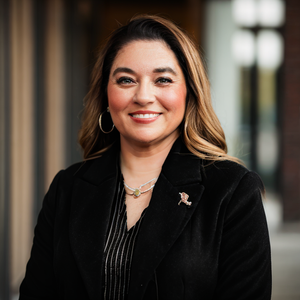
Chrisi Hagan is a REALTOR® with the Collins Lassiter Group at Red 1 Realty, serving Columbus and Central Ohio. Ranked in the top 1% of Columbus MLS agents, she specializes in helping buyers and sellers, including those rightsizing, relocating, and military families, make confident moves across Lewis Center, Powell, Dublin, Westerville, Upper Arlington, and the broader Central Ohio market.
Equal Housing Opportunity. Chrisi Hagan is licensed as a Real Estate Salesperson in Ohio, regulated by the Ohio Division of Real Estate & Professional Licensing. This article is general information only and does not constitute legal, tax, or financial advice. Confirm your specific costs and transaction details with your title company, tax advisor, or lender.